
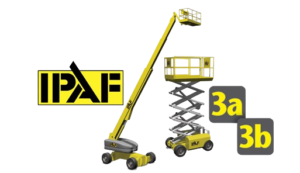
Working at height using Mobile Elevated Work Platforms (MEWPs) requires proper training, technical knowledge, and a strong understanding of workplace safety. One of the most common questions operators ask is:
What is the difference between IPAF 3A and 3B categories?
Understanding these IPAF categories is important for selecting the correct training course, operating equipment safely, and meeting site safety requirements across construction, maintenance, logistics, oil & gas, and industrial sectors in the UAE.
Operators looking for professional IPAF MEWP training in Abu Dhabi can benefit from certified programs that cover scissor lifts, cherry pickers, and boom platforms used across different industries.
What is IPAF Training?
The International Powered Access Federation (IPAF) is a globally recognized organization focused on the safe and effective use of powered access equipment.
IPAF training helps operators learn:
• Safe operation of MEWPs
• Hazard identification and risk control
• Emergency procedures
• Pre-use equipment inspections
• Work-at-height safety practices
After successfully completing the course, operators receive the internationally recognized IPAF PAL Card, which demonstrates competency in operating powered access equipment safely.
Understanding IPAF Categories
IPAF training categories are based on the type of machine being used. The most commonly used categories are:
• IPAF 3A – Mobile Vertical
• IPAF 3B – Mobile Boom
Although both categories involve elevated access equipment, each one applies to different machine types and operating methods.
IPAF 3A – Mobile Vertical (Scissor Lift)
The IPAF 3A category covers mobile vertical platforms, commonly known as scissor lifts.
These machines:
• Move vertically only
• Can travel while elevated
• Provide straight vertical access
• Are commonly used on level surfaces
Equipment Covered Under IPAF 3A
• Scissor lifts
• Mobile vertical personnel platforms
Common Applications
3A machines are widely used for:
• Warehouse operations
• Indoor maintenance work
• Electrical installation
• Ceiling and HVAC works
• Construction finishing tasks
What Operators Learn in 3A Training
Training includes:
• Safe maneuvering and positioning
• Pre-use inspection procedures
• Emergency lowering systems
• Platform stability awareness
• Hazard identification and avoidance
Main Feature of 3A
The machine can move while elevated but only provides vertical lifting movement.
IPAF 3B – Mobile Boom (Cherry Picker)
The IPAF 3B category covers mobile boom lifts, also called cherry pickers.
Unlike scissor lifts, 3B machines provide:
• Vertical reach
• Horizontal outreach
• Flexible boom positioning
• Access around obstacles
Equipment Covered Under IPAF 3B
• Self-propelled boom lifts
• Telescopic boom lifts
• Articulating boom lifts
Common Applications
3B machines are commonly used for:
• Exterior building maintenance
• Telecom installation
• High-rise construction
• Steel erection projects
• Industrial maintenance operations
What Operators Learn in 3B Training
The course focuses on:
• Safe driving and operation
• Boom positioning techniques
• Stability and load awareness
• Ground condition assessment
• Emergency rescue procedures
Main Feature of 3B
The boom can move both vertically and horizontally, allowing access to difficult-to-reach work areas.
Main Difference Between IPAF 3A and 3B
| IPAF Category | Machine Type | Movement Type | Can Move While Elevated? | Common Equipment |
|---|---|---|---|---|
| 3A | Mobile Vertical | Vertical only | Yes | Scissor lifts |
| 3B | Mobile Boom | Vertical + Horizontal | Yes | Cherry pickers |
Which IPAF Category Do You Need?
The correct IPAF course depends on the type of equipment you operate on-site.
Choose IPAF 3A If You Use:
• Scissor lifts
• Mobile vertical platforms
• Indoor access equipment
Choose IPAF 3B If You Use:
• Cherry pickers
• Articulating booms
• Telescopic boom lifts
Many operators choose combined MEWP operator training such as:
• IPAF 3A + 3B
This provides greater flexibility across multiple work environments.
What Does the “+” Symbol Mean in IPAF?
Categories such as:
• 3A+
• 3B+
indicate that the operator has successfully completed PAL+ advanced practical assessment training.
PAL+ certification demonstrates enhanced competency in:
• High-risk environments
• Complex site operations
• Advanced machine handling conditions
Other IPAF Categories Explained
Besides 3A and 3B, IPAF also includes:
• 1A – Static Vertical Platforms
• PAV – Push Around Vertical
• MCWP – Mast Climbing Work Platforms
• IAD – Insulated Aerial Devices
• H – Harness Use & Inspection
• LOAD – Loading & Unloading
• MM – MEWPs for Managers
• GH / TPH / PH – Construction Hoists
Each category is designed for specific equipment types and workplace applications.
Why IPAF Training Matters
Professional IPAF operator training helps organizations:
• Improve workplace safety
• Reduce work-at-height incidents
• Increase operator competency
• Meet project safety requirements
• Improve operational efficiency
For industries across Abu Dhabi and the UAE, IPAF certification is increasingly becoming a mandatory requirement for MEWP operators.
Why Choose Trimax Inspection and Training LLC?
Trimax Inspection and Training LLC provides industry-focused IPAF programs designed for UAE operational environments.
Benefits Include:
• Experienced practical trainers
• Internationally recognized IPAF certification
• Hands-on operator assessments
• Flexible training solutions
• Training aligned with UAE industrial safety standards
The training programs are suitable for construction, maintenance, oil & gas, logistics, and industrial sectors.
Conclusion
Understanding the difference between IPAF 3A and 3B categories is essential for choosing the correct MEWP training course and operating powered access equipment safely.
• IPAF 3A covers scissor lifts and vertical access platforms
• IPAF 3B focuses on mobile boom lifts and cherry pickers
By selecting the correct IPAF category, operators can improve safety, enhance workplace competency, and ensure compliance with modern work-at-height requirements across the UAE.